
Smokos Loyalty Programme: Points, Tiers, Cashback And Reward Rules
The Smokos loyalty programme concerns rewards connected with eligible account activity. Points, tiers, cashback and promotional credit describe different parts of that relationship. Understanding the distinction is more useful than focusing only on a tier name or the largest displayed percentage.
A loyalty benefit should remain secondary to a personal spending boundary. Additional gambling can cost more than the reward it produces. A higher status does not make a game safer, remove the house edge or guarantee a profitable session.
Use the programme’s applicable conditions to establish how points are earned, how rewards are calculated and what restrictions apply. Do not combine figures from different versions of a programme or assume that a benefit described for one account necessarily applies to another.
How A Loyalty Programme Fits Around Account Activity
A loyalty programme is separate from the underlying game rules. A game determines the outcome of a bet, while the programme can determine whether eligible activity contributes to points or rewards. A benefit does not alter the probability of a particular spin, hand or wheel result.
Keep the main elements distinct:
- Eligible activity: The account actions that qualify under the programme’s conditions.
- Points: A measure used to track qualifying activity or progression.
- Tier: A status level that may connect with defined benefits.
- Reward: Cash, promotional credit or another benefit subject to its own treatment.
One element should not be used as a substitute for another. A points total is not automatically a cash balance, and a tier badge does not establish a withdrawal entitlement.
Read The Programme As A Set Of Conditions
The useful questions are practical: what activity qualifies, how is it measured, when is a reward credited and what can be done with it? A programme description should be understood through those questions rather than treated as a promise of value.
If different pages show incompatible figures, do not average them or choose the more attractive version. Establish the applicable account conditions before relying on a number.
Points And Qualifying Gameplay
Points can be calculated from eligible turnover, but the relevant earning rule determines what counts. Different game types may be treated differently, and excluded activity may not contribute at all.
Check:
- Earning basis: Establish whether points relate to stakes, turnover or another defined measure.
- Game treatment: Read whether different formats earn at different rates.
- Exclusions: Identify activity that does not qualify.
- Timing: Understand when a qualifying entry appears in the account record.
A completed round can have a game result and a separate loyalty entry. The two do not necessarily appear in the same place or at the same moment. Do not interpret a delayed points display as proof that the game itself failed.
Turnover Is Not The Same As Money Lost
Turnover adds the value of qualifying bets. A remaining balance can be used repeatedly, so turnover can exceed the amount deposited. That does not mean the turnover amount has been earned.
For an illustrative session, an account can place A$100 of bets using a smaller starting balance if returns are repeatedly wagered. The actual financial result still depends on deposits, withdrawals and the ending balance. Points should not obscure that result.
Tier Progression And Status
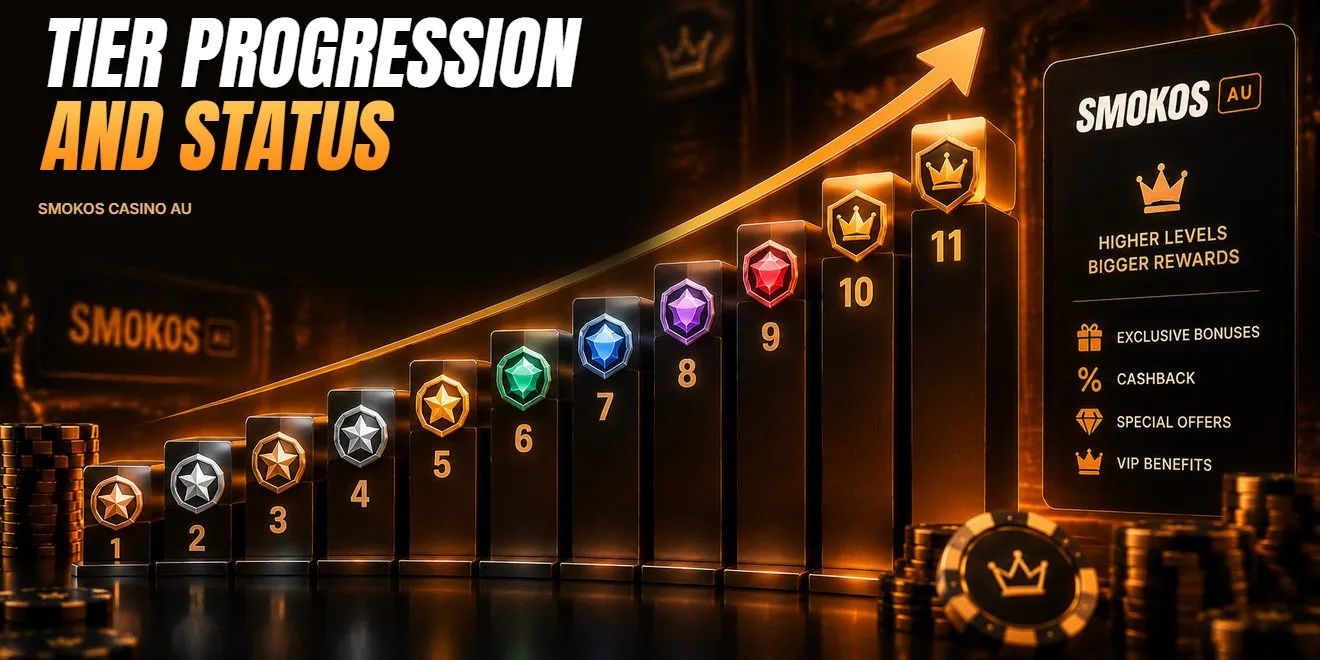
A tier can represent a threshold reached through qualifying activity. The programme conditions determine how status is obtained and what benefits attach to it. A title such as gold or VIP has no universal meaning across services.
Read the progression rules carefully:
- Threshold: Identify the amount or measure required to reach a level.
- Assessment period: Check the period over which qualifying activity is counted.
- Status duration: Establish how long a level remains available.
- Benefit conditions: Read the rules for each associated reward.
Do not assume that a points reset automatically removes a tier or that a retained tier preserves every benefit forever. Points, status and reward eligibility can follow separate rules.
Avoid Spending To Reach The Next Level
Being close to a threshold can make extra activity feel worthwhile. Calculate the additional exposure before acting. The value of a possible reward should not be considered without the cost of the activity required to obtain it.
If the next level requires spending beyond an affordable budget, leave it unreached. A status badge is not a financial obligation, and a programme should not decide the amount needed for ordinary life.
Cashback Calculations
Cashback depends on a defined calculation base and period. A percentage alone does not show the amount payable. The programme may define eligible net losses, excluded balances, minimum activity or a maximum reward.
Establish:
- Calculation base: Identify which losses or other values are included.
- Measurement window: Check the beginning and end of the relevant period.
- Exclusions: Read how bonuses, adjustments or particular games are treated.
- Credit treatment: Determine whether the result is cash or promotional credit.
Without those details, applying a percentage to a remembered deposit amount can produce the wrong expectation. Deposits and eligible losses are not necessarily the same figure.
A Hypothetical Cashback Example
Suppose an illustrative programme calculates cashback on A$80 of eligible net losses at 5%. The mathematical amount would be A$4 before any other stated condition. This example explains the calculation and does not establish a Smokos rate.
The overall session would still involve a loss. Cashback returning part of a loss does not make the original activity profitable. Creating additional losses to receive a larger rebate can increase the total amount lost.
Rakeback And Other Reward Labels
Reward names can describe different calculations. Cashback often refers to a defined loss measure, while another programme may use a measure related to eligible turnover or theoretical contribution. The actual terms must establish what a particular label means.
Do not assume that similar names are interchangeable:
- Calculation: Check the exact measure used rather than relying on the label.
- Eligibility: Read which activity and balances qualify.
- Timing: Establish when the reward is assessed and credited.
- Restrictions: Confirm wagering, expiry and withdrawal treatment.
A reward that appears more frequently is not necessarily more valuable. Its amount, conditions and relationship with the activity that produced it all matter.
Compare Benefits On The Same Basis
A weekly reward and a per-session reward may cover different periods. A percentage applied to turnover cannot be compared directly with the same percentage applied to net losses.
Keep the calculation base visible. Otherwise, two figures that look similar can describe very different benefits. Where the rule is unclear, obtain clarification rather than filling the gap with an assumption.
Cash Rewards And Promotional Credit
A loyalty entry can be cash, restricted credit, free spins or another defined benefit. The account display and applicable conditions should establish which one it is. A currency amount beside a reward does not automatically make it withdrawable.
Check:
- Balance destination: Identify where the reward is credited.
- Wagering: Establish whether qualifying turnover is required.
- Eligible games: Read restrictions on how the credit can be used.
- Expiry: Note any deadline for claiming or using the reward.
- Cashout treatment: Check whether a maximum or other condition applies.
Read the rules before accepting or using a benefit. A reward can introduce conditions that do not apply to an ordinary cash balance.
Free Spins Within Loyalty Rewards
Rewarded spins can have a fixed stake and selected games. The count alone does not describe the complete value. A smaller count at one stake can differ from a larger count at another.
Also establish how resulting winnings are treated. They may enter a promotional balance with separate conditions. Do not assume that every spin return is immediately available for withdrawal.
Reward Credit, Claiming And Expiry
A reward can be assessed, made available, claimed and credited through separate stages. The programme conditions determine whether action is required and which deadline applies. Missing one stage should not be confused with a failed game settlement.
Keep a simple record:
- Relevant period: Identify the activity window associated with the reward.
- Expected stage: Establish whether assessment, claiming or credit is outstanding.
- Visible status: Record what the account currently shows.
- Reference: Retain any identifier connected with the reward enquiry.
A countdown should not create pressure to gamble. If a reward expires unused, do not make another deposit simply to replace its perceived value.
Claiming Does Not Always Remove Restrictions
A claimed reward may still have conditions attached to its use or withdrawal. The claim action and completion of those conditions are separate events.
Before selecting an account action, read its consequences. Cancelling a promotion or requesting a withdrawal can affect restricted funds according to the relevant terms. Avoid assuming that every balance remains unchanged.
Points Resets, Tier Changes And Programme Updates
Programme measures can follow defined periods and change over time. A current points balance does not necessarily describe historical activity, and a tier change may use a different assessment rule from a reward calculation.
Check the effect on:
- Current points: Establish whether they expire, reset or remain available.
- Tier status: Read how a level is retained or changed.
- Unclaimed rewards: Identify any separate deadlines.
- Future activity: Understand which conditions apply after an update.
Do not combine an older earning rate with a newer benefit table. The resulting calculation may describe no actual version of the programme.
Keep Relevant Records Without Exposing Secrets
Where a benefit affects an important decision, retain the applicable wording or account reference securely. Avoid keeping passwords or authentication codes in the same record.
If a change creates uncertainty, ask which condition applies to the relevant period. A clear date and reward reference are more useful than a broad claim that the programme used to look different.
Loyalty Benefits And Withdrawal Conditions

A programme may describe account benefits connected with payments or support. Those benefits do not remove identity checks, payment ownership requirements or legal restrictions. A higher tier is not a substitute for an accurate account record.
Before relying on a payment benefit, establish:
- Eligibility: Confirm that the benefit applies to the relevant account and period.
- Scope: Read whether it concerns limits, processing or another defined service.
- Outstanding checks: Address any identity or payment requirement separately.
- Actual status: Use the transaction record to follow a particular request.
A priority description should not be interpreted as a guarantee that every payment will arrive immediately. Account processing and payment-network delivery can be separate stages.
Do Not Gamble To Unlock A Needed Withdrawal
If access to essential money feels dependent on reaching another tier, stop and clarify the account position. More gambling is not a reliable solution to an unresolved payment question.
Ask about the specific withdrawal requirement and relevant terms. Keep that administrative task separate from further game activity or promotional progression.
Referral Rewards And Loyalty Rewards
A referral programme can have a different purpose and set of conditions from loyalty progression. Inviting a qualifying person is not the same as earning points through eligible activity. Their rewards should not be assumed to share a calculation.
Keep the distinction clear:
- Qualification: Establish what action creates entitlement under each programme.
- Account checks: Read which people or accounts must meet verification requirements.
- Reward type: Identify cash, bonus credit or another benefit.
- Withdrawal treatment: Check the conditions attached to the credited amount.
Do not transfer figures from one programme to another. A referral amount does not establish a cashback rate, and a tier name does not necessarily change an invitation reward.
Avoid Pressuring Other People
An incentive can create a financial reason to encourage someone else to gamble. That is a reason to communicate conditions clearly, not to make stronger promises.
Do not describe a conditional reward as guaranteed income or pressure a friend to deposit so that a benefit can be earned. The other person should make an independent decision based on their circumstances and applicable restrictions.
Understanding The Cost Of Chasing Rewards
A reward can make additional play feel purposeful. The financial reality still depends on stakes, outcomes and combined spending. Points do not cancel losses, and a badge does not make a later session more likely to win.
Warning signs include:
- Extending sessions: Continuing beyond the planned finish to reach a threshold.
- Additional deposits: Adding money because a reward seems close.
- Ignoring net spending: Focusing on points while avoiding the complete financial result.
- Treating status as an obligation: Feeling required to maintain a level despite harm.
If these patterns appear, stop and seek qualified support. A programme should not override essential costs, sleep, work or relationships.
A Reward Threshold Is Not A Budget
A programme threshold describes a qualifying measure. An affordable budget describes what can be lost without causing harm. The first should not determine the second.
Set the personal boundary before looking at progress. If a reward remains unfinished when the boundary is reached, leave it unfinished. Protecting ordinary financial commitments matters more than completing a promotional target.
Missing Points And Reward Questions
A useful reward enquiry identifies the relevant period, activity and visible status. It should distinguish missing points from a missing cashback credit or a tier question. Those issues can involve different rules.
Include:
- Programme element: State whether the issue concerns points, status or a particular reward.
- Relevant dates: Identify the assessment period or qualifying activity.
- Account entry: Describe what was credited or what appears absent.
- Specific question: Explain which condition needs clarification.
Do not send passwords or complete payment credentials. Use the secure route for any ownership evidence requested and retain the case reference.
Follow One Consistent Case
Keep previous responses and use the existing reference where possible. Several different calculations sent through separate messages can make the issue harder to follow.
Do not continue gambling to test whether an entry appears. Additional activity can create more records without resolving the original question. Establish the applicable rule and status first.
A Practical Loyalty Checklist
A short checklist can keep reward decisions focused on conditions and affordability rather than presentation. Use it before accepting a benefit or changing a spending plan.
Ask:
- What qualifies? Identify the exact eligible activity.
- How is it calculated? Establish the base, rate and period.
- What is credited? Distinguish cash, spins and restricted credit.
- What remains to be done? Read wagering, claiming and expiry requirements.
- Is it affordable? Keep the personal budget unchanged.
If an answer is missing, do not replace it with a more favourable assumption. A clear understanding is more useful than a large but uncertain headline figure.
Comparing Reward Values Without Confusing The Figures
A programme can display several numbers at once. A points balance, cashback rate and maximum reward can describe different measures. Comparing them directly can create an expectation that the conditions do not support.
Use A Defined Calculation Period
Start with the dates that belong to the reward. A weekly assessment and a monthly assessment can include different transactions. A withdrawal posted after a period ends may also need separate treatment under the applicable calculation.
Do not build an expected reward from memory alone. Use the activity record and the definition of eligible activity. Where a transaction is excluded, keep that exclusion visible rather than silently treating every entry as qualifying.
A useful calculation should be reproducible. Someone reading the same dates, base and rate should be able to understand how the amount was reached. If the rule does not provide enough detail, ask for clarification before relying on the figure.
Separate Gross Benefits From Net Spending
A reward can have a visible face value while the activity associated with it costs more. The financial result includes money deposited, money withdrawn and the remaining balance. It should not be replaced by the value of one credited benefit.
For example, receiving promotional credit after a losing period does not restore the cash automatically. The credit may carry further conditions, and using it can involve additional risk. A benefit should be understood in its actual form rather than valued as unrestricted cash by default.
Keep A Personal Limit Outside The Calculation
Programme calculations answer whether an activity qualifies. Personal limits answer what is affordable. Neither a points total nor an approaching reward date should move the boundary already chosen.
If calculating a reward becomes a reason to continue gambling, pause the calculation and the session. A spreadsheet or precise percentage does not make unaffordable activity appropriate. Financial clarity should support a decision to stop when needed.
Keep records private and concise. Reward history can be useful for a enquiry, but secret credentials and unnecessary identity files do not belong in the same notes. Retain the relevant dates and references without creating another source of exposed account access.
Smokos Loyalty Programme FAQs
Not automatically. Points are a programme measure unless the applicable rules establish a conversion or use. A displayed total should not be treated as withdrawable money without understanding the relevant condition.
A loyalty level does not itself change a game’s mathematics. The exact title and settings determine outcomes. Benefits should be assessed separately from the risk of the bets used to qualify.
Cashback returns only the amount produced by its calculation and conditions. It does not automatically offset all losses. Compare the full financial result rather than treating a percentage as protection from harm.
Do not increase spending beyond an affordable boundary to complete a programme target. Additional activity can cost more than the reward returns. A threshold is not an obligation or a personal budget.
No assumption should be made. Their qualifying actions, calculation and withdrawal treatment can differ. Read the conditions attached to each programme rather than moving figures from one to the other.
Identify the reward type, relevant period, visible entry and specific condition in question. Retain the reference and avoid further gambling merely to test the display. Keep the enquiry connected with one clear case.