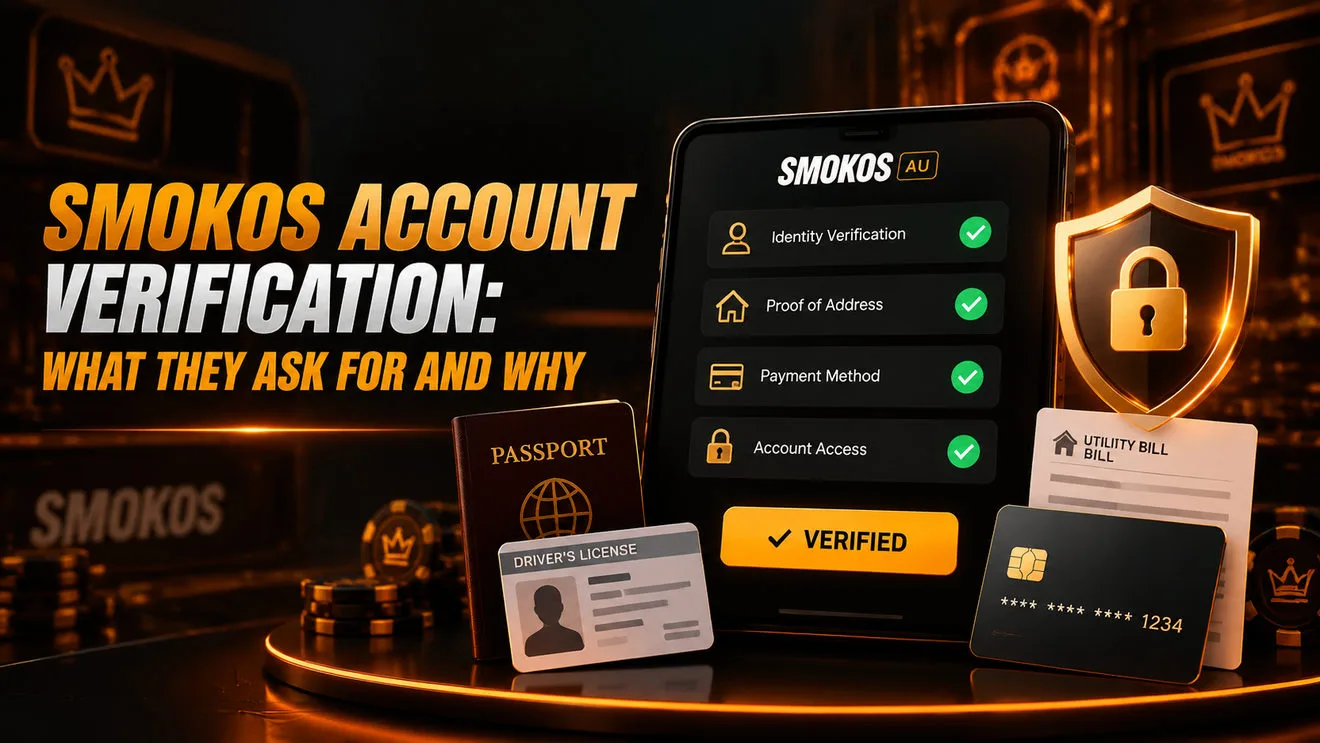
Smokos Account Verification: Identity, Address And Payment Checks
Smokos verification connects account details with evidence of identity, address and payment ownership. Each part has a different purpose. Preparing the right document for the right check can reduce avoidable delays and make it easier to understand a request when additional evidence is needed.
Before sending anything, read the requirements shown in the secure account process. Accepted documents, date limits and file standards can differ between checks. An authentic document can still be unsuitable if it is expired, unreadable or missing a required detail. Uploading several unrelated files does not necessarily solve that problem.
Verification does not establish that a gambling service is authorised in a particular location. Age eligibility, identity checks and geographic permission are separate matters. People physically in Australia should understand the prohibition on providing online casino services there and should not bypass access restrictions.
What Account Verification Is Designed To Establish

An identity check seeks to connect a registered person with an accepted identity document or other supported evidence. The name and date of birth entered during registration should correspond with the evidence submitted. A discrepancy can require clarification even where the document itself is genuine.
Identity And Account Ownership
Use your own account and documents. Another person’s identity cannot substitute for yours, and an account should not be passed between friends or relatives. Permission to use someone else’s details does not make the account relationship accurate.
If an account detail was entered incorrectly, explain the error through the proper correction route. Do not alter the document to match an incorrect entry. The aim is a consistent, accurate account record, rather than making two conflicting entries appear superficially identical.
Address And Payment Ownership
An address check establishes the residential address associated with the account. It serves a different purpose from a photo identity check. A passport may identify a person without establishing their current home address, while a recent household document may establish an address without proving identity.
Payment ownership concerns the funding or withdrawal method. It can require evidence that the relevant card, bank account or wallet belongs to the registered person. A payment reference on its own may confirm a transaction without establishing ownership.
Keep these distinctions clear when preparing files. Sending a good identity document repeatedly will not necessarily answer an address or payment question. Identify the outstanding requirement and supply the evidence that directly addresses it.
When To Check Verification Requirements
Read the account requirements before making a financial commitment. If particular evidence will be needed later, establish whether you can provide it accurately and securely. Avoid assuming that a successful registration or deposit means no further checks will occur.
Before Committing Money
Do not deposit again simply because an account is waiting for documents. Additional payments do not make an unreadable file clearer or correct an inconsistent name. They can instead create more transaction records that need to be understood.
If eligibility is uncertain, resolve it before continuing. An account check should not be treated as a way to obtain permission where the service is restricted. Accurate identity details and compliance with location rules remain separate requirements.
Before A Withdrawal Request
A withdrawal can bring outstanding account or payment questions into focus. Check the current verification status and any specific request before selecting a withdrawal destination. A method used for deposits may not necessarily be available for withdrawals.
Do not assume that documents accepted for one purpose settle every future question. A change of address, payment method or account circumstances can create a different evidence requirement. Read the current request rather than relying only on a previous submission.
Keep a record of the request date and case reference. The relevant status is more useful than guessing from how much time has passed.
Proof Of Identity: Preparing A Readable Document
A passport or driving licence can be a common identity example, but the accepted list shown during submission should decide what is used. Requirements can include expiry status, visible details and whether both sides are needed. Do not assume that every photo-bearing document qualifies.
Check The Accepted Document Type
Check the spelling of the name and the date of birth. Where a name has changed, the account process may require an explanation or supporting evidence. Use genuine records and ask which additional document is appropriate before sending unrelated material.
An expired document can create a different issue from a blurry image. Rephotographing an expired document does not address its validity. Identify the actual reason for rejection so that the next submission resolves it.
Capture The Entire Document Clearly
- Place the document on a plain surface with even lighting.
- Keep edges visible and avoid glare over names, dates or document numbers.
- Make sure the image is sharp enough to read at ordinary viewing size.
Do not cover required areas with fingers or other objects. Avoid reflections, heavy shadows and cropped corners. A clear complete image is normally more useful than an aggressively enlarged image of only one field.
Follow any instruction about original photographs, scans or supported file types. Do not add filters or alter the content. If a file must be reduced in size, check that the resulting text remains legible before uploading.
Proof Of Address: Names, Dates And Residential Details
A proof-of-address document should establish the relevant name and residential address under the submission requirements. A payment confirmation or envelope may contain an address without meeting the accepted evidence standard. Check the supported list before using it.
Match The Account’s Current Address
If you have moved, ask how to update the account record. Do not submit an older address merely because it matches an entry that is no longer accurate. A correct current record is more important than preserving an outdated match.
Where spelling or formatting differs, distinguish a harmless presentation difference from a genuine mismatch. An abbreviated street type may be different from an entirely different residence. Explain the situation rather than changing the document.
Check The Issue Date And Complete Page
Some address checks require a document issued within a stated period. Use the actual date requirement shown during submission. A file downloaded recently may contain an older document date, so downloading it again does not automatically make the evidence current.
Keep the name, address, issue date and issuer visible where required. A screenshot that excludes the date can make a useful document incomplete. Check the full page before deciding whether a cropped version is acceptable.
If household bills are not in your name, ask which alternative evidence is supported. Do not substitute a relative’s document and assume a shared address settles the question. The evidence must meet the specific account requirement.
Proof Of Payment: Cards, Bank Accounts And Wallets

Payment evidence can be used to establish ownership of a particular funding method. The request should identify which method and which details are needed. Do not send an entire financial history when a limited ownership check is being requested.
Understand What The Request Needs To Show
For bank evidence, check whether the name and relevant account identifiers are visible. For card evidence, follow the exact masking instructions supplied through the secure process. Required visibility can differ, so avoid improvising.
Never send a card security code, account password or one-time authentication code in an ordinary message. Those details are not a substitute for proof of ownership. If a request asks for unusual access, clarify it before proceeding.
Keep Funding And Withdrawal Details Consistent
A payment account should belong to the registered person. Differences between names, shared accounts or business accounts may require clarification. Do not assume that permission from another person makes their method suitable for your account.
If a payment method has expired or been replaced, explain the change. Ask what evidence is needed to connect the earlier payment with the current ownership record. Sending a new card image without explaining the original transaction may not answer the outstanding question.
Where a deposit-only method was used, establish the permitted withdrawal route. The alternative should be verified through the normal account process. Do not nominate an unrelated person’s account to avoid a check.
Secure Uploads And Personal Data Protection
Sensitive documents should be sent through the secure process intended for that purpose. Ordinary contact messages can be useful for asking what is required, but they should not contain unnecessary identity or payment material.
Use The Designated Submission Route
Before uploading, confirm that the request relates to the correct account and case. Be cautious with unexpected messages that create urgency or direct you to an unfamiliar destination. A familiar logo does not establish that a request is genuine.
Do not disable device protections or install unfamiliar software to complete a document submission. If a standard process is not working, report the technical problem through the usual route. Security settings should not be weakened to make an uncertain request succeed.
Send Only What Is Required
Match the evidence to the stated purpose. Extra documents can expose more personal details without resolving the outstanding requirement. If the request is unclear, ask which field or relationship needs to be established.
Where redaction is allowed, follow the instructions precisely. Masking required identifiers can make the file unusable, while leaving unnecessary sensitive fields exposed can create avoidable privacy risk.
Keep local copies securely and remove temporary screenshots from shared devices. Avoid storing identity files in public folders or unsecured message threads. Document handling deserves the same care as password handling.
File Quality And Submission Checks
A file must satisfy both technical limits and document requirements. A supported image type can still be unreadable. A clear file can still fail to upload if it exceeds the accepted size.
Check Format, Size And Readability
- If compression is needed, compare the reduced file with the original before submitting.
- Names, dates and identifiers should remain readable.
- Do not repeatedly compress the same image until text becomes distorted.
Avoid password-protecting a file unless the process specifically supports it. A document that cannot be opened may need to be resubmitted. Follow the stated upload standards instead of assuming that a familiar email attachment format will work.
Confirm The Submission Status
An upload progress bar does not necessarily mean the document has been accepted. Check whether the process confirms receipt and whether another step remains. Save the reference or status where one is supplied.
If the page becomes unresponsive, check the current state before uploading again. Multiple duplicate files can make it harder to know which version is being considered. A single clear submission with a traceable status is easier to follow.
Keep the submission time and document type in your own notes. This helps when a follow-up asks which file was sent, especially where identity, address and payment checks were completed separately.
Rejected Documents And Account Corrections
A rejection can concern quality, expiry, missing details, an unsupported document type or an account mismatch. These are different problems. The next submission should resolve the actual reason rather than repeating the same file.
Respond To The Specific Reason
For glare or blur, retake the image carefully. For a missing page, provide the required complete document. For an unsupported type, choose an accepted alternative. For a name or address mismatch, seek the appropriate account correction.
If the reason is unclear, ask for a precise explanation. Do not guess by sending every document available. A focused question can prevent additional exposure of personal material and reduce repeated unsuccessful submissions.
Correct Genuine Registration Errors
A mistyped name or date should be addressed openly through the account process. Explain what was entered incorrectly and provide the evidence requested for a correction. Do not create a second account as a workaround.
Account records and documents should reflect genuine details. Altering an image to make it match an incorrect account entry can create a more serious issue than the original typo.
Retain the case reference and keep the explanation consistent. Several contradictory accounts of the same change can complicate the process. A clear description of one genuine error is easier to assess.
Timing, Pending Checks And Follow-Up
Document handling can depend on the type of check, file quality and whether further evidence is required. A general estimate does not guarantee the outcome of every case. Follow the actual status and any specific response received.
Avoid Assuming A Guaranteed Completion Time
Distinguish awaiting receipt, awaiting assessment and awaiting a separate account action. Time elapsed alone does not establish which stage is outstanding. Ask what remains and whether you need to do anything.
Do not make additional payments to obtain faster treatment. A document issue is resolved through suitable evidence and the proper process, not through further gambling activity.
Keep A Concise Case Record
- Record the dates, document types and references connected with the request.
- Keep copies of relevant responses.
- When following up, identify the unresolved point rather than repeating the entire account history.
If a new request differs from an earlier one, establish whether it replaces or supplements the earlier requirement. This can prevent an old instruction from being applied to a new check.
Avoid opening several separate cases for the same issue unless instructed. One consistent record makes it easier to connect documents, corrections and decisions. It also reduces the chance of sending sensitive material repeatedly.
Name Changes, Different Scripts And Unusual Cases
A marriage, legal name change or corrected record can mean that valid documents show different names. Explain the relationship between the records and ask which supporting evidence is accepted. Do not assume that choosing whichever name matches one document will settle the whole account record.
Explain A Genuine Change Before Resubmitting
The same care applies to transliteration and different writing systems. A passport and bank record can render a name differently without belonging to different people. The appropriate response is a clear explanation and accepted evidence, rather than editing a scan or creating a new account.
Check Translation Requirements
Where a document is written in another language, establish whether the original is accepted and whether a translation is needed. A self-written translation may not meet the requirement. Ask what standard is expected before paying for a service or sending additional files.
Keep original documents alongside any accepted translation. A translated page may explain the text without replacing the need to establish the underlying document’s authenticity. If a file contains several pages, check that the complete required set is included.
Unusual circumstances are best handled through one consistent case. State the specific difficulty, retain the response and follow the instructions that apply to that account.
Smokos Verification FAQs
No assumption should be made. Registration records account details, while verification may require separate evidence. Check the current status and specific requirements. A successful deposit or sign-in does not prove that every identity, address or payment question has been settled.
Not necessarily. Identity, address and payment ownership serve different purposes. A document may satisfy one requirement without satisfying another. Follow the actual accepted list and visibility rules instead of assuming that a single photo document covers everything.
Ask which supported alternatives can establish your own address. A relative’s bill may show a shared residence without proving the account holder’s relationship to it. Do not alter a document or assume that a matching address alone is sufficient.
No. Ordinary messages should not contain card security codes, passwords or authentication codes. Follow the designated secure evidence process and exact masking instructions. If a request seems unusual, clarify the purpose and route before sending sensitive material.
Enlarging a blurry image does not restore detail that was never captured. Retake the photograph with steady focus and even lighting. Check the complete file for readability before uploading, including corners, dates and required identifiers.
Identify the reason and address that specific issue. Retaking an expired document does not resolve expiry, and resending a cropped file does not restore missing details. Ask for clarification where needed and keep the case reference.
No. Identity checks and geographic authorisation are separate matters. A verified account does not remove legal restrictions on providing online casino services to people physically in Australia. Do not use verification status as a reason to bypass location controls.
A document requirement should be resolved through the stated evidence process. Do not make additional gambling payments simply to try to accelerate a check. Ask what is outstanding and supply suitable evidence through the designated secure route.